

Current concerns about immigration in Canada often center on the negative impact newcomers have on housing affordability.
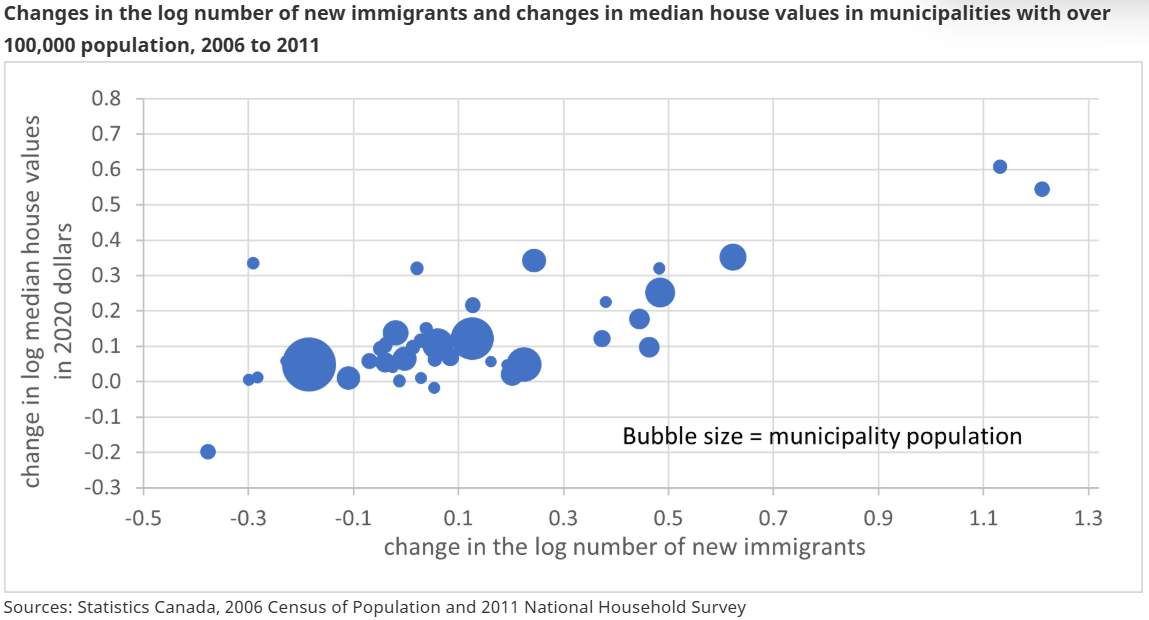
However, Jonathan Oldman, ISSofBC’s CEO, recently highlighted on LinkedIn a research report, “Immigration and housing prices across municipalities in Canada,” from Immigration, Refugees and Citizenship Canada (IRCC), which shows that the connection between housing affordability and immigration is far more complex.
Canada’s housing affordability crisis is often framed as a simple equation with an obvious culprit: immigration. It’s a narrative that spreads easily, especially during moments of economic anxiety. However, like many things that sound simple, it’s also incomplete.
In June, IRCC and Statistics Canada released a comprehensive, data-driven analysis on how immigration affects home prices and rents. The findings offer much-needed clarity on an often-polarized debate.
What the research shows
The analysis examined the period from 2006 to 2021 across municipalities nationwide. Its conclusion?
New immigrant arrivals accounted for about 11% of the increase in housing prices and rents during those 15 years.
Immigration is a factor, but far from the dominant driver of rising housing costs.
Beyond the headline figure, the study shows:
- Regional variation matters. The impact differs widely across communities and time periods.
-
In larger municipalities (over 100,000 residents) where housing supply is already tight, immigration accounted for:
- ~20% of increases in home values, and
- ~13% of rent increases.
Even in these high-demand areas, most price growth is driven by other forces.
- Structural issues play a much bigger role: interest rates, zoning rules, construction capacity, and longstanding bottlenecks in housing supply.
- Notably, immigration also helps expand the housing supply by bringing in skilled tradespeople, construction workers, and engineers — the very people Canada needs to build more homes.
The takeaway
Population contributes to housing demand – that’s a demographic reality.
However, the current affordability crisis is rooted in structural problems within Canada’s housing system, issues that have accumulated over decades:
- Addressing affordability will require addressing supply constraints, modernizing planning systems, and increasing construction capacity.
It’s time to stop blaming immigrants for a complex, system-wide problem.
We can, and should, have honest conversations about housing, but those conversations must be grounded in evidence, not scapegoating.
Explaining the facts, not repeating hearsay
Even when strong evidence exists, using research like this recent IRCC report to change public perceptions around immigration remains challenging for three main reasons:
- Complex research is challenging to communicate – Housing economics and demographic modelling aren’t easily summarized and explained.
- Those most convinced that immigration is the leading cause may not be swayed by data and research – When official numbers conflict with personal experience or intuition, the data can feel unpersuasive, even when it’s rigorous.
- It doesn’t fit a headline-friendly narrative – For example, a recent Globe and Mail article, “Young Canadians increasingly tie immigration to home affordability problems, survey finds,” did not reference the IRCC/Statistics Canada study, which tells a more nuanced story. In fact, five months after the report’s release, there has been (as far as we’re aware) no media coverage of this research. More must be done to promote the facts around immigration beyond simple narratives.
How can you support?
If you are interested in finding solutions to the housing crisis and supporting newcomers in British Columbia, you can join The Canada We Believe In campaign, which has already garnered support from nearly 200 civil society, business, and community organizations across Canada.
Please share this blog and Jonathan’s LinkedIn post with your networks. Help keep the conversation going.