
When Israel arrived in British Columbia in November 2024, he had already crossed borders, faced political upheaval, and navigated life with a disability in countries where accessibility was far from guaranteed.
Originally from Sudan, he arrived in Canada when his family could no longer remain safely in the region. “I came to Canada because my mother could not enter Ethiopia due to political reasons, and the Canadian government accepted us.”
This invitation from the government of Canada confirmed Israel and his family’s refugee status, so they were able to travel to Canada with the assistance of the United Nations as official ‘Government-Assisted Refugees’, or GARs. This also meant they could join our Refugee Assistance Program (RAP) and start building their life in Canada as soon as they landed.
“Even though I am disabled, the RAP staff made me feel like I am equal to a healthy person because they treat everyone equally.”
– Israel BEDLLU, Refugee and English Student
Living with a disability in Sudan
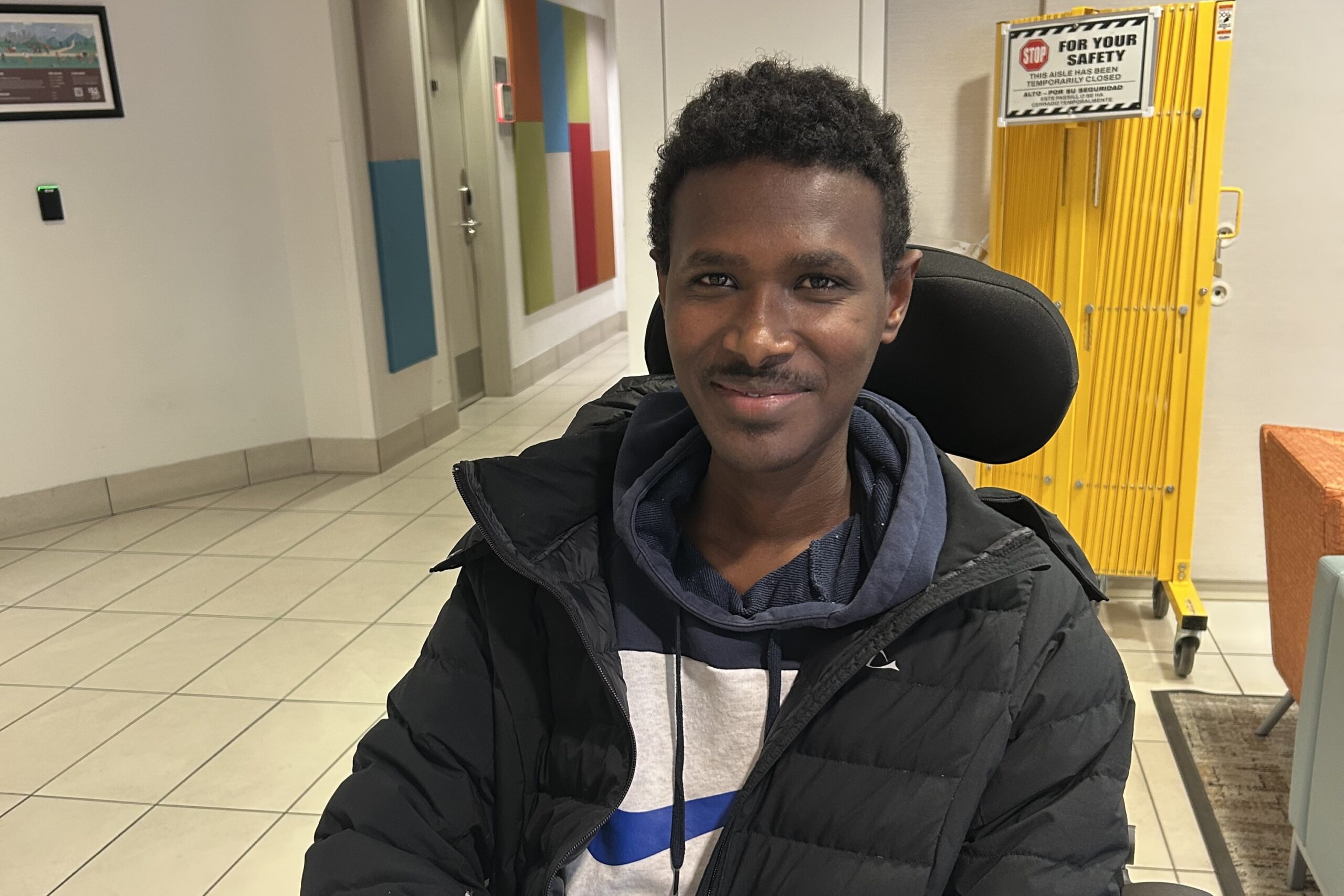
For Israel, living with a disability in his home country meant facing daily barriers that many people never have to think about. “I was excluded from school, but I used to walk and learn,” he explains. When his condition worsened, he began using a wheelchair. Even basic mobility became a challenge. “I had a lot of difficulty using transportation. People had to carry me to the bus, and I could not study.”
Everything changed when he arrived in British Columbia.
“Since I arrived in British Columbia, I can move from place to place and could restart my studies.” For the first time in years, education was an option again. Accessibility was no longer a barrier; it was built into the world around him.
Israel says ISSofBC’s support played a key role in making this new beginning possible. “One of the biggest and most important things that ISSofBC has done for me is to help me get a provincial ID and health card. They helped me start treatment, join a new school, and found a house for me… The biggest thing they did for me was to give me a battery-operated wheelchair, a lifting machine, and an electric bed.”
These supports gave Israel new independence and optimism for the future. What stayed with him the most was how he was treated: “Even though I am disabled, the RAP staff made me feel like I am equal to a healthy person because they treat everyone equally.”
Now, Israel’s first goal is to learn English, and then continue with formal education to build a career. This hope is rooted in the possibilities he didn’t always have.
Israel’s message to other newcomers
For other newcomers with disabilities who are preparing to start life in Canada, Israel says, “Canada is a country that is friendly to people with disabilities. The Canadian government gives you the same rights as a healthy person. Transportation is designed for people with disabilities so that you can move from place to place, study, and work.”
Israel’s story is a reminder that when accessibility, compassion, and opportunity come together, they can transform a life—and open doors to a future full of promise.
Are you a newcomer in British Columbia struggling with accessibility or disabilities?
If you are new to British Columbia and are facing challenges similar to those Israel faced, please contact our settlement services by emailing info@issbc.org or visiting the program page for our Moving Ahead Program (MAP).